Ironman 70.3 Training Plan: A Coach's Guide for Athletes with Full Lives
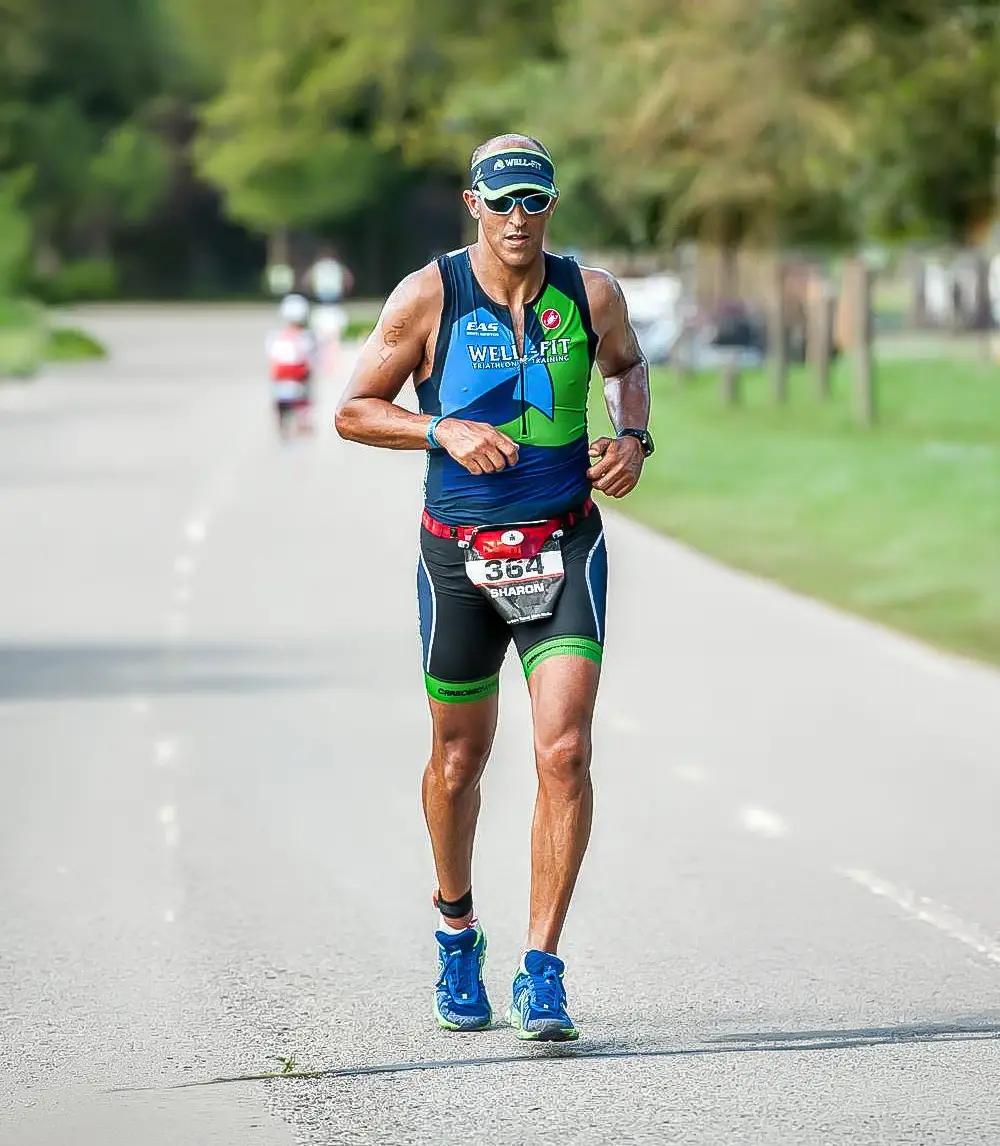
The first time I got in a pool to train for an Ironman, I got out after 200 yards, exhausted. I didn't own a bike. Twenty minutes was the longest I'd ever run. A year later, I finished the Ironman World Championship in Kona — better than half the field.
I tell you this because most 70.3 training plans, you'll find online assume you have nothing else going on. Mine doesn't. You're running a company, managing a team, and on a plane half the month — and you've decided to take on a half Ironman anyway. Good. Let's build the plan around your actual life, not a fantasy version of it.
I've coached 617 athletes to the Ironman finish line. 46 of them made it to Kona, and 27 qualified for a USAT World Championship. Three years after I closed my own training facility and had to rebuild my fitness from nothing, I qualified for the 2025 Ironman 70.3 World Championship in Nice in my own 60–64 age group. So, when I tell you this is doable around a full schedule, I'm not guessing. Here's the plan:
What Is an Ironman 70.3, Really
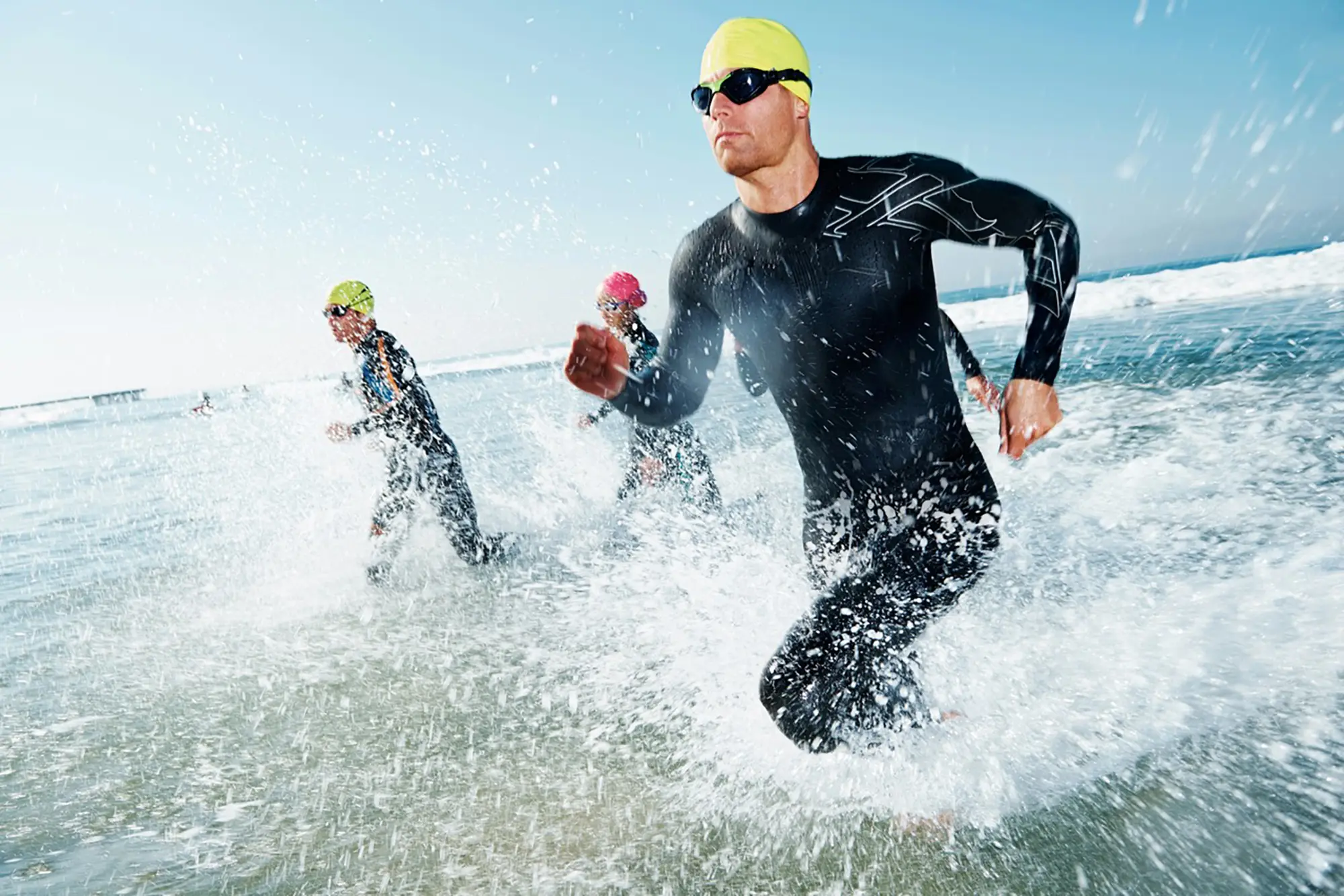
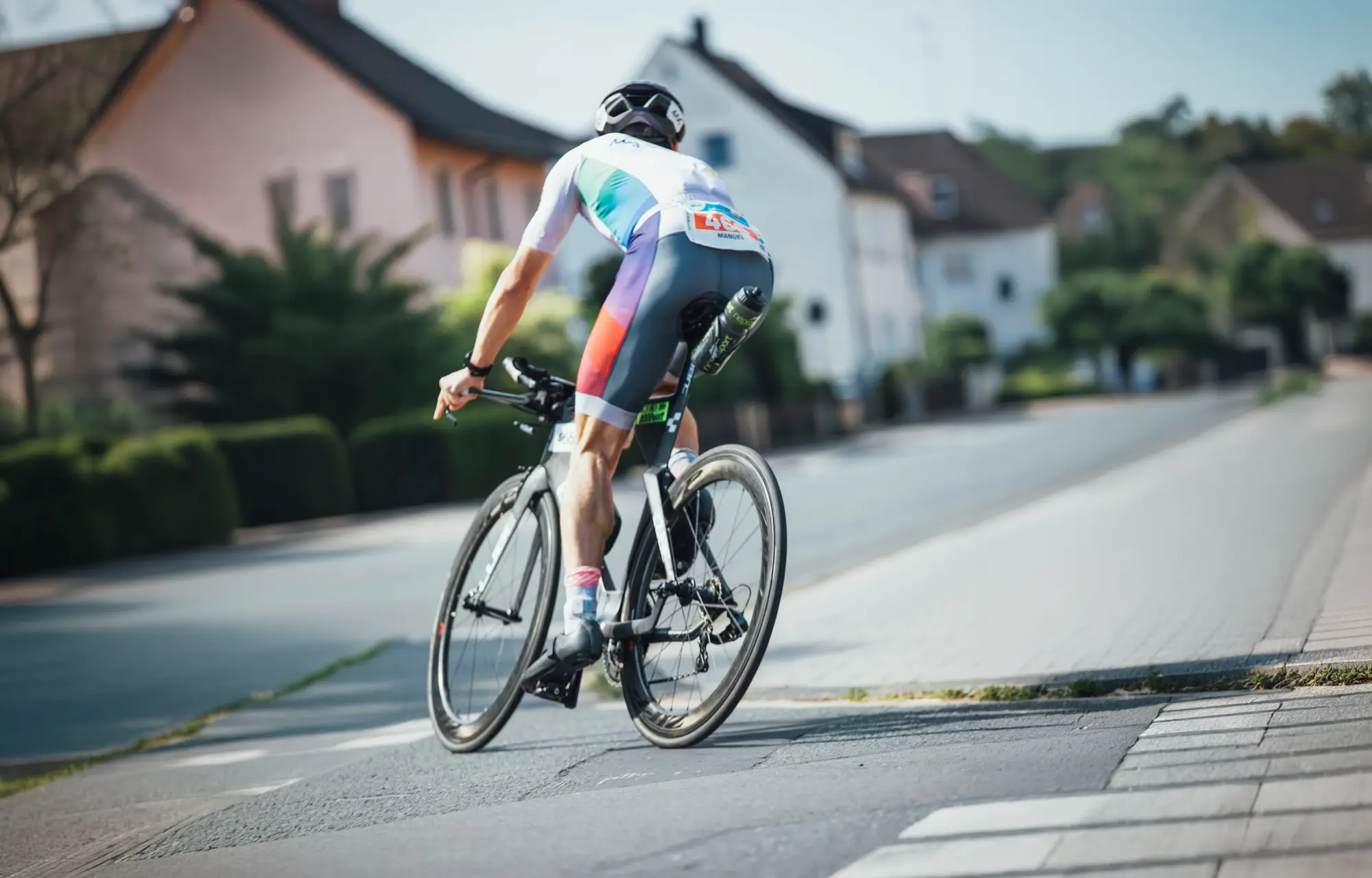
A 70.3 — most people call it a half Ironman — is a 1.2-mile swim, a 56-mile bike, and a 13.1-mile run. In metric, that’s 1.9 km, 90 km, and 21.1 km. Add them up, and you get the Ironman 70.3 distances that give the race its name: 70.3 miles total.
DISCIPLINE | MILES | KILOMETERS | AVG FINISH TIME |
|---|---|---|---|
Swim | 1.2 mi | 1.9 km | ~35–50 min |
Bike | 56 mi | 90 km | ~2:30–3:15 |
Run | 13.1 mi | 21.1 km | ~1:50–2:30 |
Total | 70.3 mi | 113 km | 5:00 – 7:00 hrs |
One thing I get asked constantly is the difference between a triathlon and an Ironman. Easy answer: "triathlon" isn't one distance; it's a category. Sprint, Olympic, 70.3, and full Ironman — all triathlons, just different lengths. "Ironman," specifically, refers to the 70.3 and the full 140.6 distances. The 70.3 sits right in the middle, which is exactly why it's the most popular long-course distance. Long enough that you can't fake it. Short enough to fit around a real job most weeks of the year.
How hard is it? Hard enough to earn respect, but not so hard that you should fear it. Train consistently for 16 to 20 weeks, and you'll finish within the cutoff, usually between 5 and 7 hours. The hard part isn't the distance — it's maintaining focus across three sports for half a day. And honestly, the executives I coach tend to be better at that than they give themselves credit for.
How Long Does It Take to Train for an Ironman 70.3
16 to 20 weeks, for most people who already have some fitness. Long enough to build a real engine. Short enough that the plan doesn't quietly fall apart in week nine, when your calendar explodes.
Inside that window: 8 to 12 hours a week at the peak. Two or three swims, two or three rides, two or three runs, with a brick mixed in — more on that in a second. That's real, but it's not unreasonable for someone already running a demanding career, as long as the plan is built around your week, not some idealized week that doesn't exist.
PHASE | TIMING | WEEKLY VOLUME | WHAT HAPPENS |
|---|---|---|---|
Foundation | Weeks 1–4 | 8–10 hrs / week | Easy aerobic volume. No intensity. Build the habit before you build the fitness. |
Build | Weeks 5–2 | 10–13 hrs / week | Brick workouts begin. Tempo runs enter. Volume climbs steadily. |
Peak | Weeks 13–14 | 12–15 hrs / week | Race-sim sessions. Sustained race-pace efforts. Highest load of the plan. |
Taper | Weeks 15–16 | 6–8 hrs / week | Volume drops sharply. Short sharp efforts. Arrive on race day fresh. |
Most plans you find online assume unlimited time, then ask you to bend your life around the training. It should go the other way.
Beginner Half Ironman Training Plan: Can You Actually Do This
Yes. Many of the athletes I've taken to their first Ironman were brand new to the distance. You don't need a triathlon background. You need a baseline of fitness and patience during the buildup.
DISCIPLINE | MINIMUM BASELINE | WHAT THAT LOOKS LIKE | IF YOU'RE BELOW IT |
|---|---|---|---|
Swim | 800m without stopping | Technique matters more than pace. Zone 2 breathing. | If not there yet: 4–8 weeks of foundation work first. |
Bike | Ride for 60 minutes | Comfortable, not casual. Zone 2 the whole way. | No fancy bike required. Any road or tri bike works. |
Run | Run 30 minutes | Continuous. No walk breaks. Conversational pace. | Below this: extend your runway to 20 weeks minimum. |
First-timers do better with more time, not less — closer to 20 weeks — and more attention on the swim specifically, because that's almost always where confidence runs out before fitness does.
You don't need to know exactly how you'll get there. You need to want it enough and hold on to it long enough. That's most of what this is.
Brick Workouts: How to Balance Swim, Bike, and Run
Quick answer to what a brick workout is: it's two disciplines back-to-back — almost always bike, then run. The reason it matters isn't fitness; it's familiarity. Running off the bike feels nothing like running on fresh legs, and the only way to prepare for that feeling is to practice it directly.
The brick rule: One per week for most of the buildup. Closer to race day, make it look like the actual race — bike at goal pace, then run at the effort you plan to hold on race day, not a jog. That's the difference between athletes who handle the run and those who just survive it.
Strength Training for a Triathlon: Yes, You Need It
Not optional. Not something you fit in when there's time left over. Strength training protects you from overuse injuries, which take out more triathletes than overtraining, makes you a more efficient runner, and matters more the busier and older you get — recovery at 50 isn't recovery at 25.
The key areas: hip stability, single-leg strength, glute activation, and the posterior chain. You don't need to be in the gym five days a week. You need two focused sessions, done consistently.
Half Ironman Nutrition Plan: What to Eat While You Train
The race-day nutrition plan deserves its own post. During the training phase, it's simpler: eat enough to support your training volume, prioritize protein for recovery, and use your long rides and runs to test exactly what you'll eat and drink on race day. Don't treat race nutrition as a separate Problem to figure out later.
By your peak weeks, you should already know what works because you've tested it, adjusted it, and tested it again. Race day is the worst possible day to discover that a new gel doesn't sit right.
Eat before long sessions, not just during and after.
Target 60–90g of carbohydrates per hour during efforts longer than 90 minutes.
Test real food alongside gels — many athletes tolerate one much better than the other.
Hydration is the variable most people underestimate during runs. Practice drinking while moving.
The Mistake I See Constantly: Overtraining
You finally get the time to train seriously, and the instinct is to make up for years of nothing, all at once. More volume. More intensity. More sessions than the plan calls for because it feels like you're behind.
It backfires every time. Overtraining during a 70.3 buildup shows up as a stalled run, a nagging injury, or a body that simply stops responding — usually right when you need it to peak. The athletes I coach mostly avoid this, not because they're more disciplined than you, but because their plan is built around their actual recovery capacity rather than a generic spreadsheet. That distinction is most of what coaching is.
More is not a training plan. Structure is.
The Half Ironman Training Program
I'm not going to paste a generic 16-week spreadsheet into this post. You've seen plenty of those, and a plan that doesn't account for your schedule, history, and goal time isn't worth much more than the page it's printed on.
Instead, I'll give you the structure I actually use to build these plans — phase by phase, hours per week, and the key sessions for each block.
Download: The Well-Fit Half Ironman Training Plan Free, structured, and adjustable to your race date. The complete 16-week framework is built around your actual calendar — not an idealized version of it.
Sharone Aharon is the founder of Well-Fit Triathlon Training.
USAT Elite Level III Certified Coach. ICF-certified executive coach. MS in Exercise Sciences, UIC. He has coached 617 athletes to the Ironman finish line — 46 to Kona, 27 to a USAT World Championship.
He has completed 10 Ironman-distance races himself, including 3 Kona World Championship starts, and most recently qualified for the 2025 Ironman 70.3 World Championship in Nice in his own 60–64 age group.